

Wish your business could grab more sales during the big shopping festivals — 9.9, 10.10, 11.11, 12.12? These “Mega Sales Days” have become huge in Asia, pulling in billions of dollars in just a few clicks.
While the spotlight often shines on big e-commerce players, small businesses have just as much to gain if they know how to use Meta ads wisely.
Recently, I had the chance to sit down with Dhruv Vohra, who leads the small and medium business group at Meta Asia Pacific. We spoke about how SMBs can prepare for these intense sales periods and make every advertising dollar count.
Guess what? You don’t need massive teams or endless budgets to compete.
With the right funnel, smart creatives, and a clear plan for budgeting and testing, you can run effective campaigns that put your products in front of shoppers when they’re ready to buy.
Why Use Meta Ads During Mega Sales
So why should small businesses lean on Meta ads when Mega Sales Days roll around? The answer is simple — that’s where your customers are making decisions.
Dhruv shared an eye-opening fact during our chat: “(Your customers) almost expect Instagram and apps on Meta to help them decide what to buy. 58% said that they lean on Instagram and Facebook and Meta to figure out and feel inspired about what to buy during [Mega Sales Days].”
Think about that. More than half of buyers are scrolling through Facebook and Instagram, looking for inspiration before they click “add to cart.” That means if your brand is not showing up, someone else’s is.
And shoppers aren’t just buying what they’ve bought before. Many are open to trying new categories or switching to new brands during these sales.
This is your chance to get noticed, especially if you’re a smaller player without the marketing firepower of the big e-commerce giants.
In other words, Meta ads put you right where discovery happens. Instead of fighting for attention in crowded marketplaces, you can reach people directly in the feeds they’re already glued to.
The Meta Ads Funnel
Imagine you’re a specialist retailer selling handcrafted jewellery. A Mega Sales Day is coming up, and you know shoppers will be hunting for deals. You’ve got two choices. You could throw out a few ads at the last minute and hope for the best. Or you could build a simple funnel that guides people from discovery to purchase.
That’s where Meta ads give you an edge. You don’t need a complicated, multi-layered strategy. In fact, Dhruv told me, “From a funnel strategy, we usually recommend full funnel… But for Mega Sales Days, because it’s time sensitive, you might want to use a dual stage strategy. It might just work better.”
So what does that look like in practice? At the top of the funnel, you run short videos or carousel ads to get attention. You don’t need to explain everything — just enough to spark curiosity and get people clicking. Then, once they’ve engaged, you follow up with conversion ads that highlight your promotion, include a strong call to action, and make it easy for them to buy.
And here’s a tip I’ve seen work again and again. Don’t rely on just one creative. As Dhruv said elsewhere, you need at least three different formats in each ad set so the system has enough to optimise from. That could be an image, a vertical Reel, and a carousel. When the algorithm has options, it can serve your ad in the format that works best for each audience segment.
In short, a dual-stage funnel is fast, focused, and built for the urgency of Mega Sales Days. It’s not about nurturing slowly over months. It’s about getting noticed today and converting tomorrow.
Creative Strategies That Work
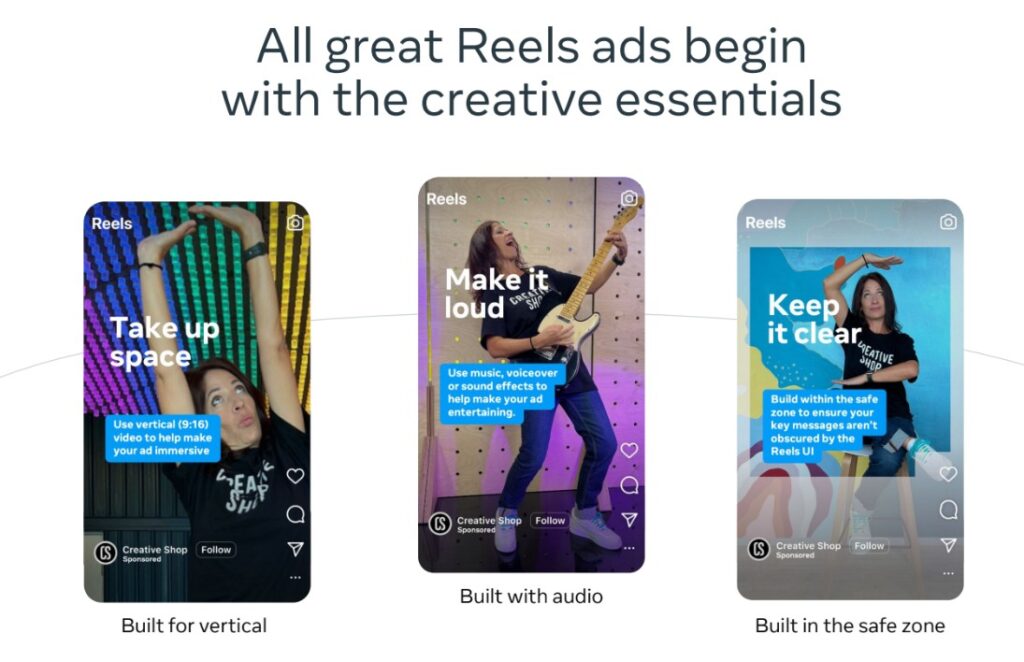
When Mega Sales Day rolls around, your ads need to cut through the noise. Shoppers are bombarded with discounts, deals, and flashing banners.
The question is how do you stand out?
Dhruv gave me a simple but powerful reminder: “Every brand has its own voice, and I think it’s important that they tell their story as authentically as possible. But there’s some general best practices and these have stood the test of time. Short, punchy videos always work well. Show the product’s main benefit right away so that you capture people’s attention, feature real customers or user generated content so you can build credibility and relatability and add strong CTAs like Shop Now or Limited Time Offer.”
That means you don’t need slick, expensive productions. What you do need is clarity and authenticity.
For example, a quick before-and-after video, a short testimonial, or even a stop-motion unboxing clip can be more persuasive than a glossy, drawn-out ad.
As Dhruv puts it: “In this day and age, a smartphone is enough. Film product demos using a smartphone and natural lighting works very well. Text overlays… add highlights and prices and deals about the promotion. Simple stop motion or unboxing videos work super well and keep the branding visible but not overpowering.”
In other words, if you can hold your phone steady, you can create ads that convert. Layer in some text to show your discount, keep your brand visible, and always add a call to action.
And don’t forget variety.
Dhruv stressed, “You’ve got to use at least three different formats under each ad asset, including image carousel Reels, nine by 16 or four to five shot videos. The reason we wanted to use all these is so that there is enough inventory for the system to optimise.”
That mix gives Meta’s algorithm room to work. Some audiences may respond to a quick Reel, others to a carousel they can swipe through. By feeding the system options, you make it easier for the AI to find what resonates and push your best creative to more people.
Budgeting and Testing Best Practices
One of the biggest questions I hear from small business owners is, “How much should I spend?”
Well, there isn’t a one-size-fits-all answer. It really depends on your industry, your margins, and how aggressive you want to be during Mega Sales Days.
Dhruv said, “We see businesses spend from 25% to over a hundred percent on top of their baseline during this period. But it’s best to test this out.”
In other words, you don’t have to go all-in right away, but you should plan to scale up if your ads are performing.
Here’s the important part — planning ahead.
“More than half the buyers have already planned for [Mega Sales Days], so you have to influence them at least 30 days in advance while they’re planning what to buy.”
Thus, your ads shouldn’t just appear on the day itself. Rather, warm up your audience weeks before with teasers, awareness messages, or even sneak previews.
Oh, and don’t forget to do testing. Dhruv was very clear on this: “Do AB tests two to three creative formats or offers. I think allocating 20% of your total budget for testing is a good practice, and you run these tests for three to seven days to ensure reliable results, and then you act on those tests.”
Think of testing as rehearsal before the big show. You want to know which creative grabs attention, which call-to-action drives clicks, and which offer makes people convert.
That way, when the sale goes live, you’re not gambling but running with proven winners.
Finally, if your ads are working and you’re getting profitable conversions, don’t be afraid to increase spend. As I often tell my clients, a well-performing ad is like a money machine—the more you put in, the more you get back.
Case Studies and Lessons
What does success actually look like in practice? Dhruv shared how Meta has been highlighting small businesses that got Mega Sales Days right in their “Small to Scale” series.
He related, “In the last year, we have highlighted brands like Razer, Perk by Kate, and others in Singapore that… adopted an early test and learn strategy to get [Mega Sales Days] right. They also had the right attribution model in place so they could seamlessly put resources where they had the maximum impact. So I would say in summary, test early so that you’re absolutely ready. Use as many creative formats as possible to tell your authentic story. Trust AI and our automation tools to find the right audience for you, for the right goals, sales leads, or awareness. And then measure so that you can adjust and calibrate your budget mix on the goal.”
There are a few lessons in there.
First, don’t leave things to the last minute. Businesses that planned ahead and tested early were able to ride into Mega Sales Days with confidence, not guesswork.
Second, variety matters. Feeding the system with multiple creatives allowed the algorithm to find what worked best.
And third, measurement isn’t just about watching numbers like your video views, shares or clicks. Rather, it’s about shifting budget to where you’re getting the most bang for your buck.
From my own experience, the businesses that win during Mega Sales Days are the ones who see it as more than just a 24-hour event. They warm up their audiences weeks in advance, build momentum, and then let automation and good creative do the heavy lifting when the rush begins.
