Wish to build greater brand loyalty online or offline? Consider how you can foster greater brand participation.
In the age of overwhelming AI-generated content clutter, the world’s top brand go beyond just splashing millions on advertising. Or endlessly generating AI slop.
They focus instead on building “genuine” emotional connections—one that is truthful, sincere, honest, authentic and heartfelt.
But how can you make your brand more social in order to strengthen your relationship with consumers?
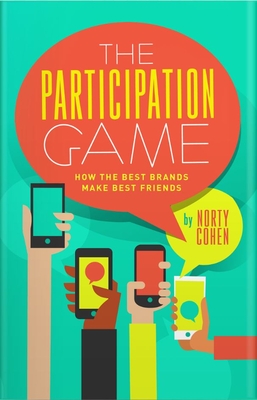
Enter The Participation Game — How The Top 100 Brands Building Loyalty in a Skeptical World by Norty Cohen.
Let us look at some of the key lessons from the book.
Why Brand Participation Matters
Traditionally, marketing was equated with military strategy.
Terms like “campaign,” “strategy,” “mission statement,” “short and long range planning,” “targets,” “attack,” and “guerrilla marketing” are commonly bandied about.
These days, marketing is less about weapons of mass persuasion, and more about creating lovemarks—brands that can “make you laugh, make you cry, or make you think.”
Participation is the X-factor, where consumers see themselves in the brands that they love.
In short, “people don’t consume advertising. They participate in brands.”
How Consumers Discover Brands
Remember the marketing funnel and its four stages—Awareness, Consideration, Conversion and Loyalty?
Unlike the old days dominated by broadcast media (TV, radio and newspapers), brand awareness (ie brand discovery) now happens primarily through Word Of Mouth (WOM).
In a survey conducted by Cohen’s creative agency Moosylvania (15,000 consumer responses over five years), it was revealed that…
- 83% discovered brands through their friends or family
- 52% through influencer posts
- 39% via online word of mouth
- 35% through written reviews
- 34% through seeing and touching
- 31% through a brand’s social media posts
What about TV ads? A paltry 26% learned about brands through this medium!
Hence, the way to evangelise to your audience is to insert your brand into a current ongoing conversation.
Forge Emotional Connection
Start with feelings, not attributes. Focus on the three most important emotions: joy, trust and anticipation.
Doing so will help you to build brand trust more than all the product features and benefits in the world.
To drive such an emotional response, consider how you can connect emotionally with your consumers:
- Allow them to “spark joy” in others (eg ‘Share a Coke’ campaign or Starbucks “Tweet A Coffee”)
- Tap onto something that consumers already feel for (eg Aerie’s #AerieReal campaign for female empowerment and body positivity)
Give Attention, Not Get Attention
Earn the attention of your audience by paying attention to the 3 Ps:
- Participation: Make sure that there is two-way interaction, using user-generated content (UGC). How can you celebrate or reward them for the content they create?
- Platform: Use a platform that allows you to connect with consumers in their language (social media channels are great!)
- Permission: Make it natural for your brand to get permission to communicate with your consumers on a topic (For example, Samsung providing a solution to a consumer challenge of taking clear, sharp photos on their mobile phones)
A good example here was Wendy’s #Share4Adoption campaign. Every post of a consumer with a photo of themselves completing a heart with an illustrated hand making half a heart on a Wendy’s cup results in a donation of US$5 to an adoption charity.
This two-way participation was real and heartfelt because Wendy’s founder Dave Thomas was adopted himself.
Make Them Look Good, Feel Good and Entertained
To gain brand participation in your campaigns, you need to shine the spotlight on your consumers.
It’s all about them, not you.
Today’s consumers want to associate with brands that they feel good supporting. These include their social causes and values (eg TOMS, Warby Parker, and Patagonia), their entertainment value (eg Disney), or their ability to make consumers feel better about themselves.
To make your audience look good, consider how your brand can fit into what the audience is already doing to build their own personal brands.
To make your audience feel good, consider the social causes important to your audience, and how they genuinely relate to your brand.
To entertain your audience, consider the types of entertainment your audience prefers (humour, inspiration, thought-provoking, heroism), how it fits the tonality of your brand, and the entertainment channels that you can tap on.
And yes, short personal videos are the way to go!
Play with Them via Brand Gamification
Challenge your consumers, have fun with them, and find a way to live in their zone.
You can harness their influencers, tap into existing gaming culture, and connect to their passions, hobbies and even time-wasters. Find a way to play with your consumers, challenge them, and incite their competitive spirit.
(Of course, an attractive prize always helps!)
There are tonnes of examples of brands which tapped on gaming. A good example is BMW’s Eyes on Gigi, where they leveraged on a classic “shell game” where players have to guess where the “treasure” is as it is shuffled around.
The catch here is that the “treasure” is supermodel Gigi Hadid, who steps into a new BMW M2. Four identical cars on a track are then raced, and your job is to keep your eyes on her. When the high-speed shell game ends, you need to identify the car she’s in.
https://www.youtube.com/watch?v=AfmMAVWK4Sw
Fit into Their Personality
Poo-poo-ing the concept of “branded concent,” the book proposes that consumers want a brand that “fits my personality.”
This means that brands need to have a concept and connection that forges a deep connection, one that is based on relevance to the consumer.
Think about how your brand can create relevancy that “fits your audience’s personality”:
- Are there things that your consumer cares about?
- What can your brand genuinely talk about—the intrinsic and extrinsic truths of your brand?
- What do consumers already do with your brand? Can you spin it off in a new or interesting way?
Spark Social Sharing
Given the extremely poor reach of an organic post on social media, brands need to activate consumers in sharing their campaigns.
But how can they do this? The idea is to co-create content with your consumers.
To improve the shareability of your brand’s campaign messages, consider the following:
- How can you effectively combine your brand message with your audience’s personal message?
- What mechanism can you give consumers to share their voice?
- What important causes do your consumers care about that you can genuinely be involved with?
Switch: From Your Target Market to Your Target’s Market
Consider these “new rules” for marketing:
- Begin with your consumers Point Of View (POV) each and every time
- Build your activations and programmes around your consumers (not your brand)
- Be ready for change every day
- Give attention first. Then worry about getting it.
- Nurture your brand advocates. Word of Mouth is your most powerful weapon.
Conclusion
Easy to understand and fast to read, The Participation Game nicely addresses the fundamentals of social branding.
What I like about the book is how it distills key lessons from the major campaigns run by the top brands into easy to digest nuggets.
Do get a copy of the book so that you can read all about the different campaigns exemplifying these strategies.