
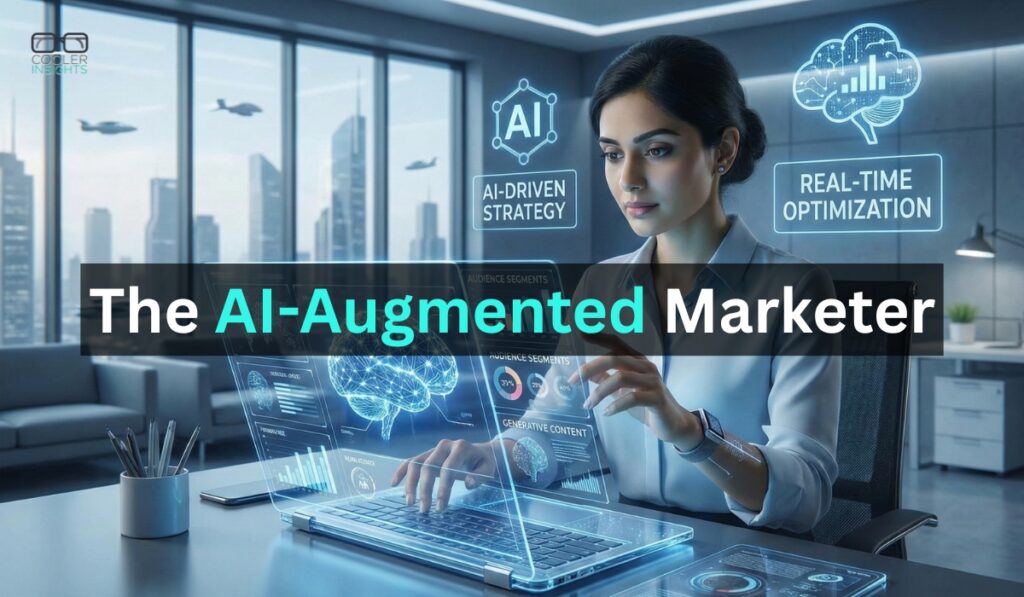
AI Image by Google Gemini
Have you incorporated Artificial Intelligence (AI) into your work as a marketer?
AI has redefined how marketing professionals approach everything from content creation, performance analysis, to lead generation and customer service. Since it is so different from every technology that came before it, its impact will be unprecedented.
As this technology is being increasingly integrated into routine responsibilities, marketers like you and I must learn to adapt to an AI-augmented world.
How AI Automation Redefined Marketing Roles
AI’s marketing applications may be new, but its impact has been enormous. Statista estimates AI’s market size will reach $250 billion by 2028, up from an estimated $74 billion in 2025. It is quickly becoming fundamental in communication, personalization, content generation and media optimization workflows.
AI can use natural language processing or computer vision to analyze text inputs or its physical surroundings in real time. Consider your daily tasks. How many could AI automate? The answer could be virtually all of them. You can design a model from the ground up for market analysis, campaign development, asset management, ideation or media planning.
This technology’s indirect effects are equally important. One report found that Google’s generative search feature could cause organic sessions to decrease by 18% on average. The aggregate change in organic traffic ranged from a 95% drop to a triple-digit increase. Since AI impacts search and buying behaviors, even those who do not use it will have to adapt.
The Skills Marketers Need to Adapt to AI Use
If your company has not yet adopted AI, it is only a matter of time. According to McKinsey & Company, 92% of organizations plan to invest more in this technology from 2025 to 2028. In this span, over 70% of employees believe it will impact at least 30% of their work. However, just 1% of leaders describe their deployments as “mature.”
A deployment that has not yet reached maturity is not fully integrated or driving significant business outcomes. Ultimately, this means implementation is still in the early phases. AI is already transforming workflows, suggesting its impact will be far greater than it already is.
To use AI effectively, you need to rethink your soft and hard skills. You should first focus on your strengths — skills AI cannot replicate or replace. Think self-awareness, creative thinking, emotional intelligence, problem-solving and human connection.
Next, you need to prioritize your technical expertise. Since AI communicates in plain language, you do not need to become a programmer or machine learning engineer. However, you will need to be able to skilfully engineer prompts. Being able to refine inputs helps you guide models in the right direction.
Last but most certainly not least, you need to be able to discern the wheat from the chaff. Critical thinking is vital for distinguishing between AI hallucinations, bias and facts.
AI Readiness Strategies Marketers Can Tap On
While you can develop soft and hard skills on your own time, training, reviewing company policies and attending hands-on sessions are ideal. To facilitate this, the best path forward is to establish open lines of communication with business and marketing leaders.
To begin, you should determine whether everyone is on the same page. Machine learning models can automate virtually any task, but that does not mean they will. The Boston Consulting Group found that the C-suite believes AI’s value lies in enterprise growth, while marketing leaders feel personalization and marketing effectiveness applications will generate more value.
Just because something is the norm does not mean it is guaranteed. Before spending hours upskilling and learning how to navigate user interfaces, speak with management about how AI will fit into your day-to-day duties.
You should also consider bringing up the importance of the human element to your superiors. Many business leaders are quick to buy into AI’s transformative power, forgetting that many creatives perceive it as a threat to their job security.
Even if you are comfortable with generative tools, others may not be. Forcing AI technology into workflows without addressing anxieties about job security can make creative professionals feel devalued and disconnected. This can lead to disengagement, which is a significant business risk.
As a matter of fact, in 2024, 37% of employees quit due to a lack of engagement. People who are not emotionally connected and committed to their jobs will be apathetic, resulting in poor performance and low retention. Respect, transparency and open communication keep teams engaged throughout the transition to AI.
Common AI Adoption Mistakes Marketers Should Avoid
Closely following success stories and best practices can help you streamline implementation and avoid major pitfalls, but it does not guarantee success. Machine learning tools are still relatively new, and mistakes can happen.
Do not forget to communicate your implementation strategy to your partners and customers. Research from the World Federation of Advertisers revealed 80% of business owners expressed legal, ethical or reputational concerns about how their creative and media vendors are using generative tools on their behalf.
Transparency is key because laws have not yet kept pace with the development of generative models. Moreover, some employees may feel apprehensive about incorporating it into their workflows. A carefully planned implementation strategy is crucial for covering regulatory bases while ensuring everyone feels heard.
The Future of AI-Augmented Marketing
Generative algorithms will shape the future of marketing, whether you want it to or not. It’s up to you to guide this technology and its applications in a good direction. If you adapt to your new role and establish open channels of communication, you can continue creating campaigns and content you can be proud of.

Eleanor Hecks is a design and marketing writer and researcher with a particular passion for CX topics. You can find her work as Editor in Chief of Designerly Magazine and as a writer for publications such as Clutch.co, Fast Company and Webdesigner Depot. Connect with her on LinkedIn or X to view her latest work.
