Email marketers face persistent challenges that drain time and resources. True personalization remains elusive, return on investment (ROI) is hard to prove and repetitive tasks bury strategic work.

Email marketers face persistent challenges that drain time and resources. True personalization remains elusive, return on investment (ROI) is hard to prove and repetitive tasks bury strategic work.
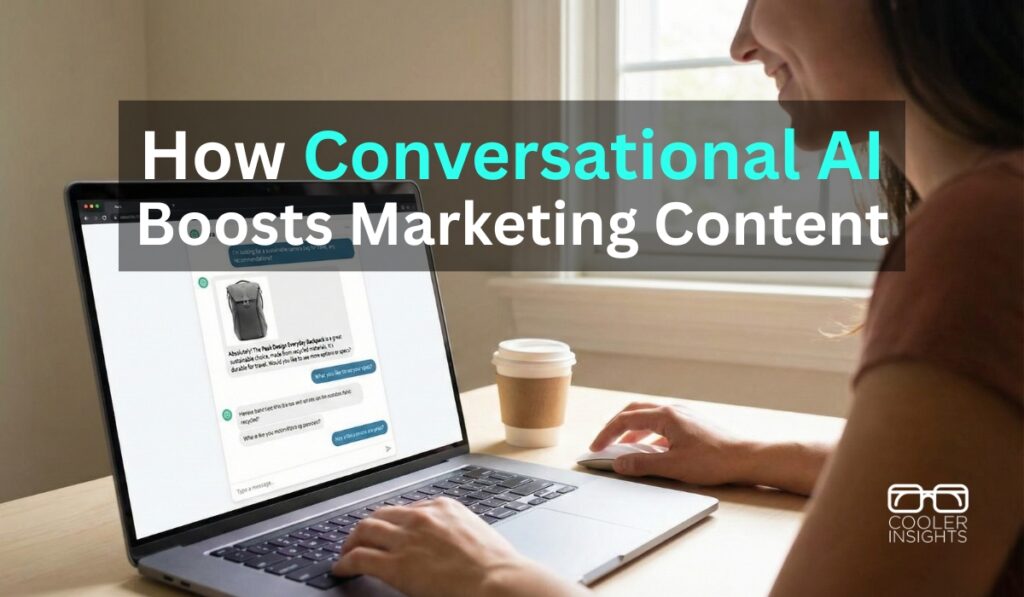
Have you deployed conversational AI to help users navigate your site? Marketing teams may be producing more content than ever, but that content isn’t always easily accessible.
Often, case studies, blog posts, videos, and white papers may be too advanced for a visitor early in their journey.
AI Image by Google Gemini
Have you incorporated Artificial Intelligence (AI) into your work as a marketer?
AI has redefined how marketing professionals approach everything from content creation, performance analysis, to lead generation and customer service. Since it is so different from every technology that came before it, its impact will be unprecedented.

Language barriers cost businesses time and money. Workers spend a significant amount of time translating ideas for global team members and diverse audiences.
Doing so requires valuable effort that they could spend on other tasks to improve the company. Miscommunications and misunderstandings also create issues for managers who must remedy the mistake.
Marketers today have more data than ever—customer clicks, purchase histories, ad performance, email opens and more. However, too often, teams spend time stitching reports together that end up with vague insights and unclear next steps.
These outcomes have led to slow decision-making that leaves opportunities on the table.
Artificial Intelligence (AI) can now detect emotions, and it’ll change the marketing world like nothing before.
Indeed, the new world of marketing moves beyond what consumers say to what their nonverbal communication reveals. Such a development is only possible with the development of emotionally-sensitive AI.

Artificial intelligence (AI) has significantly transformed how industries work across the board. Amongst these, user experience (UX) design has been one of the most affected. Thanks to AI-enhanced prototyping, the way digital products are conceptualized, tested and refined is rapidly changing.
By taking advantage of AI, businesses and designers can organize workflows better, improve collaboration and create more user-focused designs faster. Understanding what AI-enhanced prototyping is, its benefits to the UX design process and reasons for adopting AI-driven tools is important to stay ahead in a competitive digital context.
For small and medium-sized business owners, designers and marketers, AI-enhanced prototyping presents a unique opportunity to accelerate development cycles while improving general user satisfaction. The artificial intelligence market grew beyond $184 billion in 2024, and it is expected to reach around $1.85 trillion by 2030.
AI-enhanced prototyping integrates artificial intelligence into the process of creating interactive digital product models. For starters, understanding the difference between UX and UI is key. The UI stands for user interface, meaning menus, interaction animations and all the general engagements that users can interact with. UX stands for the user experience, meaning the entire experience that users have, from opening the app or website until leaving.
Through AI-enhanced prototyping, designers can visualize, test and refine functionalities before getting to full-scale development. AI-driven tools automate repetitive tasks and create design recommendations while offering real-time insights based on the user’s behavior.
In traditional UX design, prototyping requires manual wireframing, user testing and frequent refinements. The AI accelerates this process by automatically generating wireframes, predicting user movements and even suggesting possible UI improvements.
Explore the key advantages of AI-enhanced prototyping for boosting UX design below.
AI-enhanced prototyping significantly reduces the time required to create and refine digital products. Traditional prototyping can be labor-intensive, often requiring multiple iterations before reaching an optimal design.
AI automates fundamental steps in this process. For instance, the wireframing tools can create draft layouts within seconds based on minimal input. Instead of manually designing every screen, designers can use AI to generate UI components, refine layouts and quickly test different versions. This allows teams to focus on high-level creative decision-making rather than spending hours on repetitive tasks.
UX design is a collaborative effort that involves designers, developers, marketers and stakeholders. Applying AI-enhanced prototyping tools benefits smooth collaboration by allowing real-time feedback, automated documentation and shared design libraries. Teams can work on the same project simultaneously, identifying changes reflected instantly across all devices.
AI-driven platforms ensure consistency in element design, reducing the risk of miscommunication or inconsistent branding. Moreover, these tools can lead to interactive prototypes that stakeholders can test without requiring extensive technical knowledge, speeding up the approval process.
By adopting AI-enhanced prototyping, SMBs can launch digital products with confidence, knowing they have been thoroughly tested and optimized before going live. This agility allows businesses to adapt to market demands faster while staying ahead of competitors.
One of the most valuable aspects of AI in UX design is its ability to analyze user behavior and come up with actionable insights. These prototyping tools are able to simulate user interactions, identify engagement patterns and recognize pain points before launching a product.
AI-driven usability testing allows designers to assess user experience more efficiently. Instead of waiting for post-launch feedback, teams can leverage AI analytics to detect if there are any navigation issues, accessibility concerns and user preferences at the early stages of the process. This proactive approach leads to fewer costly revisions down the line and higher user satisfaction.
In this phase, marketers can test different layouts, calls to action and visual elements to determine what is more connected with their target audience. This leads to higher engagement rates and better conversion outcomes, making AI a powerful tool for optimizing digital campaigns.
When it comes to digital products, personalization is one of the most important features to focus on. AI algorithms can analyze user data to tailor content, layout and functionality based on individual preferences. This results in engaging, relevant and user-friendly experiences.
For example, AI can predict user needs by analyzing previous interactions, suggesting placing frequently used features in the more accessible areas or adjusting UI elements based on the user’s behavior. By including these tools early in the design process, the marketing team can refine messaging, content placement and conversion strategies while creating interfaces that resonate more deeply with their audience.
UX designers often spend a significant amount of time on repetitive tasks such as resizing buttons, aligning text or converting low-fidelity sketches into high-fidelity mockups. By automating technical and repetitive aspects of UX design, AI frees up time for designers to focus on storytelling, aesthetics and user engagement.
For example, AI-powered design assistants can create multiple variations of a layout, suggest improvements based on best practices and even fill wireframes with realistic placeholder content. Taking advantage of new technologies helps designers decrease the number of tedious tasks while increasing the time dedicated to conceptualizing unique experiences that make a product truly stand out.
A significant concern in the workplace is the lack of meaningful work, which leads to high employee turnover rates. In fact, 31% of employees quit their jobs in 2022 due to a lack of meaningful work.
AI can help handle this issue by automating low-impact or unengaging tasks, allowing UX professionals to take care of more fulfilling and high-impact work. Instead of getting stuck in routine design adjustments, designers and marketers can focus on tasks such as problem-solving, innovation and user engagement. This ultimately leads to greater job satisfaction and career growth.
These are some steps to consider when integrating AI-enhanced prototyping into your UX design process:
With 73% of U.S. executives assuring that they will work with generative AI companies, it’s clear AI is here to stay.
Increasing efficiency, improving collaboration and offering deeper user insights are just some of the ways AI-enhanced prototyping is reshaping the UX design process. For designers, marketers and small business owners, capitalizing on AI-driven tools accelerates product development and encourages creativity and innovation.
By integrating AI into the team’s workflows, professionals can focus on what truly matters — creating meaningful, engaging and user-friendly digital experiences.

Eleanor Hecks is a design and marketing writer and researcher with a particular passion for CX topics. You can find her work as Editor in Chief of Designerly Magazine and as a writer for publications such as Clutch.co, Fast Company and Webdesigner Depot. Connect with her on LinkedIn or X to view her latest work.
Artificial Intelligence (AI) is now an integral part of your marketing strategy. You can now find marketing AI tools to help your business improve virtually everything—from customer service to social media management.
However, it can be mind boggling to navigate the different AI tools that you can use to automate and streamline your marketing.
Artificial intelligence (AI) has quickly gained traction as a design tool. As helpful as it can be in ensuring functionality and accessibility, though, these are not the only factors to consider in user experience (UX).
A good UX must also incorporate human emotion. This requires the uncanny ability to study, dissect and interpret what users feel in a way that is machine-learning friendly.
A/B testing is an industry go-to for discovering your customers’ preferences. The usual way to do this is to isolate a specific variable (eg copy, visual, audience, channel, pages) and to see which performs better with everything else being equal.
If you have an underperforming email marketing campaign for instance, you could create two templates to send to customers to see which yields click-throughs.