
What will help you stand out when almost everybody has access to the same AI tools?
Will it be better prompts? Faster output? A larger collection of AI applications?
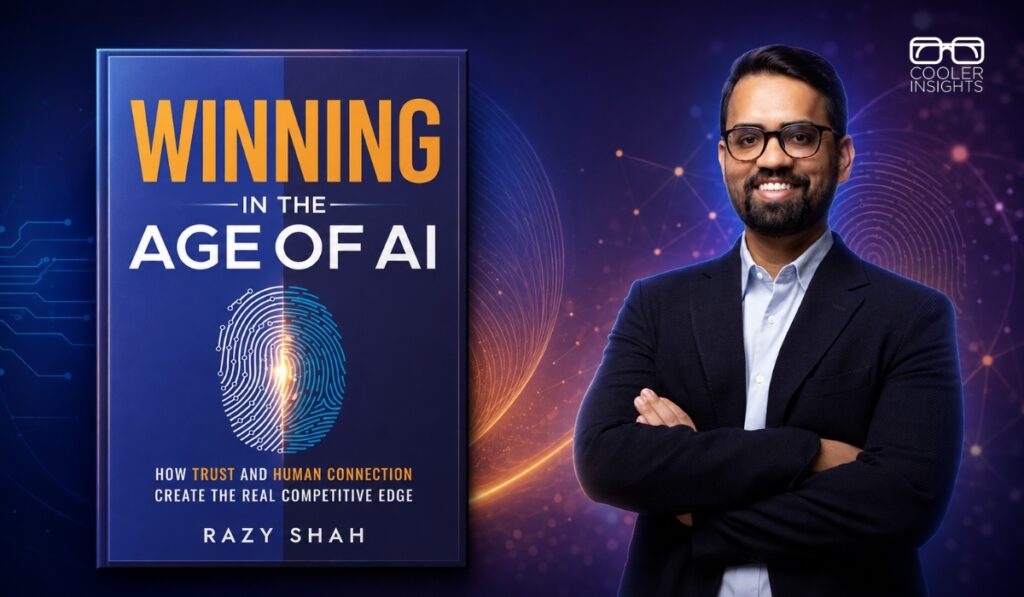
In the book Winning in the Age of AI: How Trust and Human Connection Create the Real Competitive Edge, author Razy Shah argues that our greatest advantage comes from the trust we earn and the relationships we build. He calls this “Human Leverage.”
According to him, it grows through “strategic positioning, relational capital and a reputation which compounds over time.” While AI can help us to extend our reach and work with greater consistency, it is good-old human connection which determines whether people remember us, trust us and open doors for us.
Who is Razy?
I first got to know Razy as a fellow course developer and trainer at Equinet Academy. From time to time, I help to run the Digital Content Creation and Content Marketing Strategy course which he helms. Through our work together, I have seen many of the principles in his book play out in real life.
Razy has always shown a willingness to offer help, share his experience, and extend goodwill to others. He gives generously and shares what he knows openly.
Thus, I can say without prejudice, that the man is every bit the same as what his book paints him out to be!
Outside Equinet Academy, Razy is the co-founder of award-winning 2Stallions Digital Marketing Agency, which he started in 2012 together with his partner Dhawal Shah (another friend and trainer from Equinet Academy). His work spans digital marketing, business development, training and advisory services. Much of the book draws from his experiences with clients, colleagues, partners and learners.
How the Book is Structured
“Winning in the Age of AI” contains 18 principles divided across three parts:
- Establish Gravity
- Forge Alliances
- Engineer Leverage
Each chapter follows a consistent format which makes it easy to read and apply. They begin with an anecdote from business or corporate life, followed by a description of the key principle itself.
This is then followed by two practical sections: Your Winning Move, which gives readers steps they can act on; and Winning With AI, which shows how readers can use AI to support the principle. With the power of AI tools, readers like us will find it easier to brainstorm ideas, prepare for conversations, organise information, develop content or follow up more consistently.
Let me now cover the 18 principles briefly.
Part 1: Establish Gravity
The first section focuses on the reputation which draws people and opportunities to you.
#1 Be Remembered
Being good at your job has limited value when people struggle to recall what you stand for.
To avoid this, Razy encourages readers to define the contribution which they want others to associate with their name. They can then reinforce this position through their work, communication and professional behaviour. When somebody encounters a relevant problem, your name should come naturally to mind.
#2 Give Value First
Strong professional relationships often begin with an act of contribution. This is the core thesis of Content Marketing — a principle I’ve adhere to throughout the last 12 years of my life as a digital marketer.
To do so, consider sharing a useful resource and idea, support somebody’s work, or introduce them to a helpful contact. Such actions build goodwill before any request enters the picture.
#3 Leave a Mark
Every interaction shapes the way others remember us. A thoughtful follow-up, an unexpected piece of help or a well-executed project can leave a lasting impression.
Often, people forget the full details of a meeting. However, they’ll remember whether you took their needs seriously and delivered what you promised.
#4 Build Quiet Visibility
In the age of live-streaming “loud-and-proud” content creators, it is difficult to be humble. Like Razy, however, I agree that visibility need not come from constant self-promotion. You can remain visible through useful articles, thoughtful comments, classes, professional conversations and acts of support.
Over time, these contributions build familiarity. People encounter your ideas often enough to recognise what you bring to the table.
This form of quiet visibility has played a major role in my own work at Cooler Insights.
#5 Be Their First Call
Razy encourages readers to become the person whom others contact when an issue truly matters. Think of the famous Ghostbusters refrain: “Who you’re gonna call?”
This position comes from repeated demonstrations of relevance and reliability.
When clients, colleagues or partners know that you can offer sound judgement, they begin to approach you early rather than after every other option has failed.
#6 Show, Don’t Just Tell
Hyperbole and exaggerated claims are all the rage these days, no thanks to AI-inflated content. However, claims become more convincing when accompanied by the right social proof.
Instead of describing your expertise at length, show people a small example of how you think and work. This could take the form of a short audit, a sample recommendation, a demonstration, a useful framework or an initial diagnosis of the problem.
Razy describes these as micro-demonstrations. They help others experience your value before making a larger commitment.
Part 2: Forge Alliances
The second part moves from personal reputation to the relationships which carry that reputation further.
#7 Lead with Listening
Good relationships begin with close attention. Ask thoughtful questions. Listen for the concerns beneath the stated request. Look for what the person values and what they hope to achieve.
This helps you respond to the individual behind the task. It may also reveal needs which a standard project brief, email or meeting agenda leaves out.
#8 Give Them a Story
People remember stories more readily than abstract claims. For instance, my age-old story of how I pivoted at age 44 from senior public officer to entrepreneur and trainer.
A good story helps others explain who you are, what you care about and the type of change you help create. These stories may come from a client experience, a professional turning point or a challenge which changed your approach. Over time, they become part of your professional identity.
#9 Nurture Champions
A champion is someone who speaks positively about you when you are absent. They may recommend your services, defend your reputation, share your work or introduce you to somebody important.
Such advocates usually emerge through forging trust, providing mutual support, and delivering consistently good work.
You cannot force somebody to become your champion. You can give them enough positive experiences to feel confident placing their reputation beside yours.
#10 Make Introductions Matter
A useful introduction needs context. Explain why the two people should meet, what they have in common and where their conversation could begin.
This protects their time and makes the connection more meaningful.
A vague message which simply says that two people “should connect” transfers all the work to them. A thoughtful introduction gives the relationship a useful starting point.
#11 Make the Elegant Ask
Many people feel uncomfortable asking for help. Razy’s elegant ask provides a more considerate approach. Keep the request clear, respectful and easy to act upon.
Explain what you need and why you approached that person. Give them enough room to decide how they wish to respond.
A well-framed request respects the relationship and reduces unnecessary pressure.
#12 Make Champions Shine
When somebody supports you, give them credit. Mention their contribution, share their work or acknowledge the role which they played.
This not only helps you to extend generosity — it also shows that you value the people around you.
Doing so further signals to future collaborators that their help will be recognised rather than quietly absorbed into your own achievements.
Part 3: Engineer Leverage
The final part uncovers how personal relationships and professional goodwill can grow through repeatable systems.
#13 Turn Personal into Repeatable
Relationships can weaken should your follow-ups depend on memory. (Trust me, this becomes harder and harder as you age!)
A simple system can help you record key details, remember important dates and identify useful reasons to reconnect.
The good thing about AI is that it can support this process by organising your notes, summarising past conversations and drafting possible follow-up messages.
#14 Map Your Influence Ecosystem
Who shapes the conversations and decisions within your field? Your influence ecosystem may include clients, peers, community leaders, professional bodies, media platforms and industry groups.
Mapping this network helps you see where strong relationships already exist and where new ones could grow.
It can also help you to direct your attention to the communities where your expertise carries the greatest relevance.
#15 Craft Your Signature
What do people associate with your name? Your signature could be a framework, specialist skill, recognisable point of view, or consistent way of helping others. It should travel further than your job title.
In my case, the phrase “Content is the lifeblood of marketing” has become closely tied to my professional work. It reflects the role which content plays across marketing, communication and customer engagement.
A clear signature makes it easier for people to remember and describe your contribution.
#16 Play the Long Game
Trust compounds across repeated interactions with the other party. A long professional relationship can lead to referrals, collaborations and opportunities which extend far beyond the original project. The benefits may surface months or years later.
This requires patience. Treating every conversation as an immediate sales opportunity may weaken the very trust which creates future value.
(I can certainly attest to this. Some of my clients have known me for decades before approaching me!)
#17 Be a Generous Connector
A generous connector brings suitable people together. They do so out of a genuine willingness to help, without asking for any favours in return.
The best connections are relevant, timely and supported by a clear reason for meeting.
Good connectors pay attention to what people need. They spot areas where two parties could help each other and make the introduction with care. Through this role, they earn trust across a wider professional network.
#18 You’re One Relationship Away
Many major turning points in our life start with a single relationship.
It could be a client who recommends you, a mentor who changes your perspective, a partner who complements your strengths or a colleague who introduces you to a new field.
The final chapter reminds us to treat relationships as human bonds with strategic value. We rarely know which connection will lead to the next defining opportunity.
Using AI to Strengthen Human Relationships
One of the book’s most useful features is the Winning With AI sections included in each chapter. Razy positions AI as a support system for human effort.
It can help you:
- research a person or organisation before a meeting
- generate questions for a meaningful conversation
- turn rough notes into organised records
- develop ideas for giving value
- map your professional network
- prepare introductions and follow-up messages
- create content which reinforces your professional signature
- and a whole lot more…
- Razy has produced an accompanying AI Implementation Playbook with prompts and frameworks to help readers apply these ideas.
However, the quality of the final interaction still rests with you and I.
AI may draft a message. However, you need to decide whether the message sounds sincere.
AI may identify a possible introduction. However, you’ll make the decision on whether both parties would benefit.
AI may remind you to contact somebody. However, you need to consider if the relationship deserves your attention.
What I Like About the Book
Many of the principles in Winning in the Age of AI aren’t new.
Give value. Listen carefully. Keep your promises. Help people. Stay in touch.
The strength of the book, however, lies in how Razy organises them into a practical progression.
First, you establish gravity through credibility and visibility. Next, you forge alliances through listening, stories and champions. Finally, you engineer leverage by creating systems which help your reputation and relationships grow.
The recurring chapter format makes the ideas easy to apply. Readers move from a story to an explanation, followed by Razy’s personal experience and an action step.
I like how the AI component gives the book a contemporary angle without allowing technology to overshadow its human message.
Should You Read Winning in the Age of AI?
This book will be useful for entrepreneurs, leaders, consultants, trainers, marketers and professionals whose success depends on trust. It will suit readers who want to use AI without losing the personal qualities which make relationships meaningful.
As AI makes competent output easier to produce, technical ability alone may offer less distinction.
People still choose whom to trust.
They still remember who helped them.
They still recommend those who have treated them well.
“Winning in the Age of AI” reminds us that our human advantage only grows through the reputation we build, and the goodwill we extend. AI can help us support that work with greater consistency.
Which of Razy’s 18 principles will you put into practice first?
