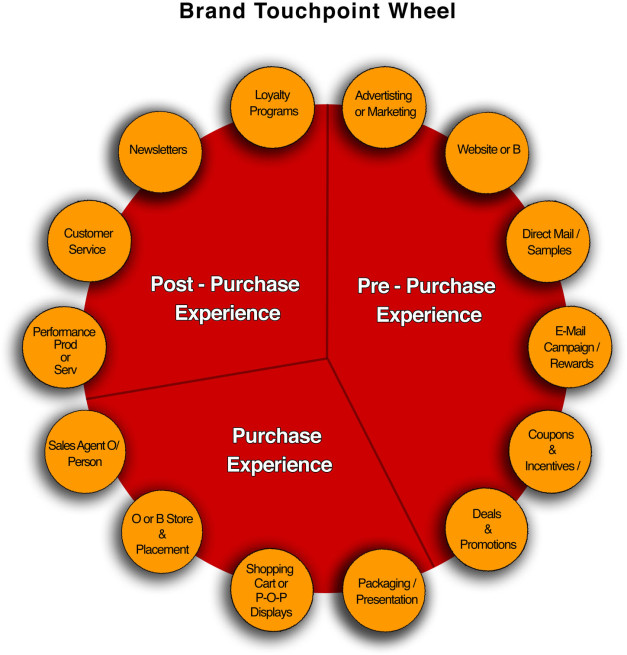
Ensure that all customer touchpoints are branded (courtesy of Marketing Brainstorm)
You’ve probably heard variations of these conversations in your own organisation:
“Our branding sucks! Let’s change our logo and splash it all over the place.”

Ensure that all customer touchpoints are branded (courtesy of Marketing Brainstorm)
You’ve probably heard variations of these conversations in your own organisation:
“Our branding sucks! Let’s change our logo and splash it all over the place.”
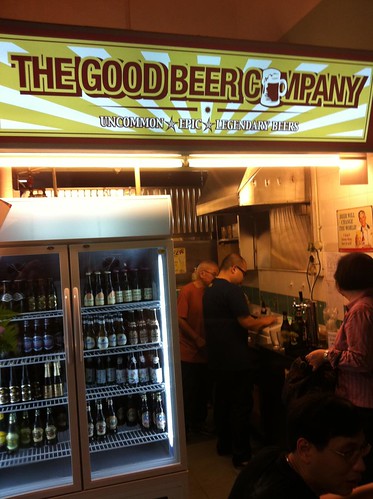
Fancy a Hobgoblin, Kopparberg pear cider, or Pauvel Kwak with chicken rice or fish ball noodles? How about a lychee flavoured Taiwanese “Xiao Mei Mei” beer to wash down a steaming plate of fish head?
Now you can with The Good Beer Company, Singapore’s first (and only) specialty and craft beer stall in a hawker centre. Opened by Daniel Goh of Young Upstarts fame, its a realisation of a long-time dream come true.

Nobody manages resources better than Nature! (image source)
Sustainability seems to be the buzzword these days. We’ve all heard about how companies are investing in carbon credits to offset their industrial activities, embark on occasional recycling programmes, or improving their efficiency to reduce their carbon footprint. While such motives are laudable, they often compromise on business profitability, and are seen more like “CSR” investments. Should the economy – and business – nosedive, would companies still be as noble?
To overturn traditional thinking on business sustainability, Gregory Unruh of the Lincoln Center for Ethics in Global Management shared that one should adopt a “value cycle” rather than the standard “value chain” in one’s business model. The idea behind this is reuse as much material from one’s products as possible, and to feed that back into the manufacturing, distributing and retailing process. This should be done in a profitable manner and be so ingrained into business practices that it becomes second nature.

P&G researchers study customers where the action truly is (courtesy of Science in the Box)
Marketing research is a huge cannon in any marketer’s arsenal. Or is it?
The weapons of choice? Street surveys, focus group discussions, straw polls, online surveys, telephone interviews, and behavioural observations. Supplement these with secondary (desktop) research findings published by research houses and voila!, you’ll have the makings of a great marketing strategy.

Steve Jobs (bless him) associated calligraphy with beautiful fonts in the Macintosh (source)
Ever wondered how disruptive innovators like Steve Jobs (Apple), Jeff Bezos (Amazon.com) and A.G. Lafley (P&G) behave? What are the traits of these great entrepreneurs and business leaders?
According to INSEAD Professor Hal Gregersen (who co-authored the book “The Innovator’s DNA” with Jeffrey Dyer and Clayton M. Christensen), they have what are called the five discovery skills as follows:
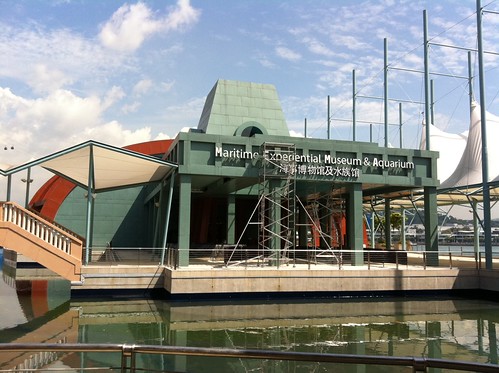
Southeast Asia’s exciting maritime past comes alive this 15 October with the opening of Singapore’s first maritime museum. Known as the Maritime Experiential Museum & Acquarium (MEMA), the attraction at Resorts World Sentosa features more than 400 rare objects including the Jewel of Muscat (a life-sized reproduction of a 9th century Arab dhow), and treasures from the Belitung Shipwreck. Designed by Ralph Appelbaum Associates, an international museum design firm, the museum depicts the romance of a bygone era with tales of seafarers braving the stormy seas along the Maritime Silk Route.
Set in the 15th century, the museum’s centrepiece revolves around the story of legendary Admiral Zheng He who launched many maritime voyages from China to the Western oceans with a fleet of 300 shops. Through highly interactive features and realistic replicas, the stories of exotic lands and seas from the past comes alive.

If only pricing strategies are this simple (courtesy of Zimbio)
In a fascinating podcast with pricing consultant Rafi Mohamed, author of The 1% Windfall: How Successful Companies Use Price to Profit and Grow, Harvard Business Review unveiled some pricing strategies from the grey market resellers of tickets. These ticket scalpers normally sell their wares on eBay, craigslist or other auction platforms, hopefully to generate a profit (or reduce their losses).
The scalping market in the US is huge, generating about US$3 billion of sales a year and resulting in loss of revenue to event organisers. There are four characteristics defining this market:
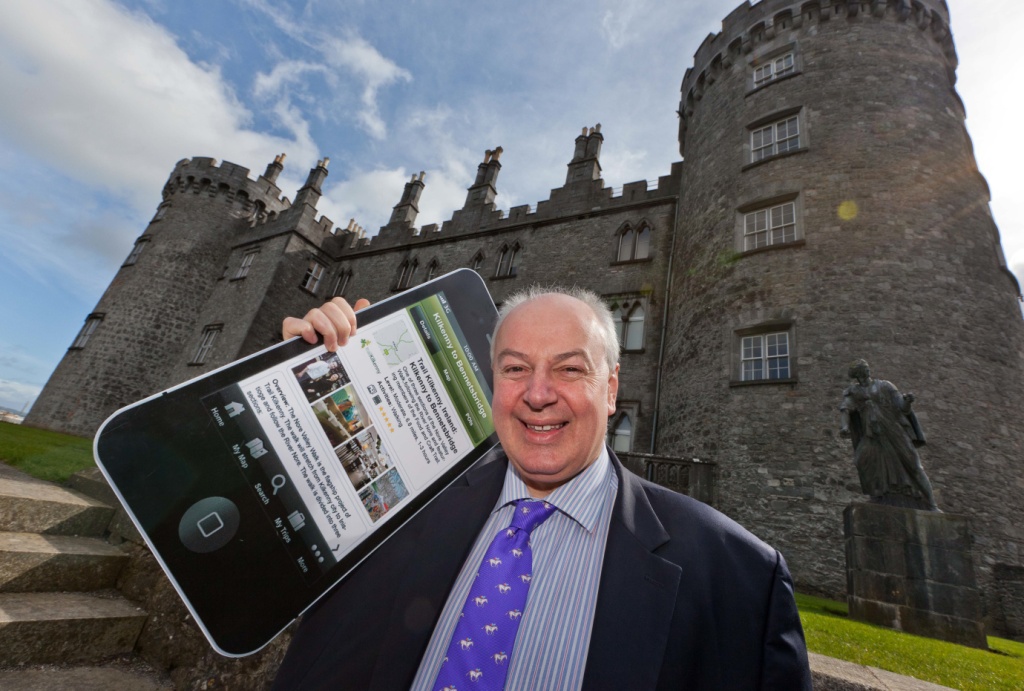
Trail Kilkenny’s smartphone app is really smart – it doesn’t impose roaming costs to tourists
Recently, I participated in a briefing comprising Singapore’s attractions industry and technology companies. The idea was for these IT and web solution providers to develop industry-wide initiatives that can boost productivity, marketing and visitor experience for museums, zoos, theme parks, aquariums, and other attractions.
As the session went on, I realised that there is a gap between what technology vendors wanted to pitch for and what tourists may be willing to embrace. The differences can be rather shocking at times.

Not everybody can brand it like Bieber (courtesy of Entertainment Earth)
Brand extensions and brand stretching are commonly used by companies wanting to expand into new product categories. According to this source, they are defined as follows:
“Brand extensions refers to the use of a successful brand name to launch new or modified products in a same broad market“ while “brand stretching refers to the use of an established brand name for products in unrelated markets“.
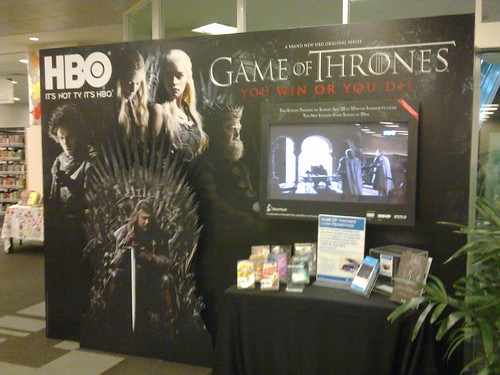
While borrowing a book recently at the Central Public Library (basement of the National Library), I came across this neat display tying in the bestselling A Song of Ice and Fire book series by author George R.R. Martin with the acclaimed HBO TV series Game of Thrones. Its nice to see our libraries transforming into experience rich learning zones with elements of Transmedia Storytelling to promote reading and literacy.
While dovetailing with a popular TV series is a good way to drive adult reading interests, incorporating a gaming challenge helps to pique the interest of kids or tweens. Here, the library has created a B.C.A. (Books Come Alive!) Sleuth Academy where “young detectives” are tasked to solve “mysteries” and uncover clues in their local community library.