Weird is the new normal. Mass is dead.
And the rich, who is anybody who can afford to buy stuff or do stuff for fun, are no longer embracing the mediocre middle of the bell curve.
Weird is the new normal. Mass is dead.
And the rich, who is anybody who can afford to buy stuff or do stuff for fun, are no longer embracing the mediocre middle of the bell curve.

Too many toys to choose from! (Ethan in a shop in Shibuya, Tokyo)
Hit by a flash of inspiration, you decided one day to pursue your dream.
You are all fired up and raring to go. After slaving away for goodness knows how long, you have perfected your recipe for world domination.

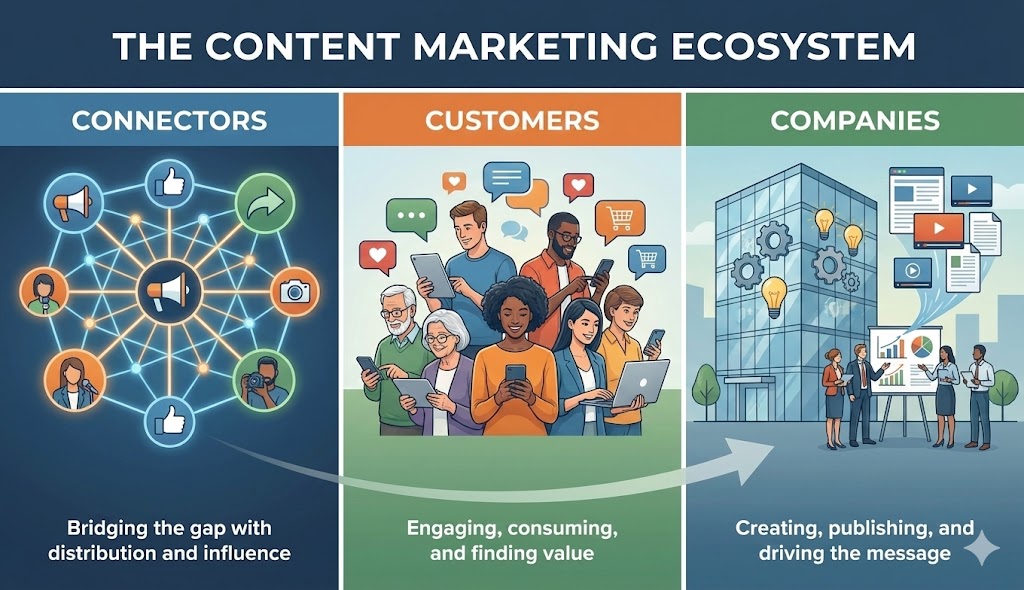
Image generated by Nano Banana on AI
Want to reach that guy staring at his laptop in a Starbucks cafe? What about that lady thumbing away at her smart phone while waiting for her cab?
What is the single best way to reach consumers in the age of social media and ubiquitous digital devices?
A picture often paints a thousand words. A great comic or cartoon, on the other hand, paints tens of thousands.
“Marketoonist” Tom Fishburne recently created a wonderful graphical depiction of 5 different types of social media strategies as depicted below:

Courtesy of Tom Fishburne
Courtesy of fedobe
What is the difference between Integrated Marketing Communication and Content Marketing? Why is Content Marketing taking the world by storm?
The old paradigm of Integrated Marketing Communication (or IMC) is dying. In a world fragmented by zillions of online, mobile and offline channels, consumers are tuning out advertisements faster than you can produce them. With endless “ad-free” options to choose from, nobody wants to be interrupted by your brand anymore.
What can marketers do in such a landscape?
A perennial favourite amongst my family members, Kipling has carved a niche for itself with its selection of well designed handbags, haversacks, satchels, wallets and suitcases. Arrayed in an attractive range of colours, designs and styles, Kipling offers something for everybody.
What I find unique about Kipling is that furry little simian dangling from the zipper. My son goes ape over those little critters. He has amassed a tidy little collection of different gorillas in shades of orange, green, red, brown, and black.
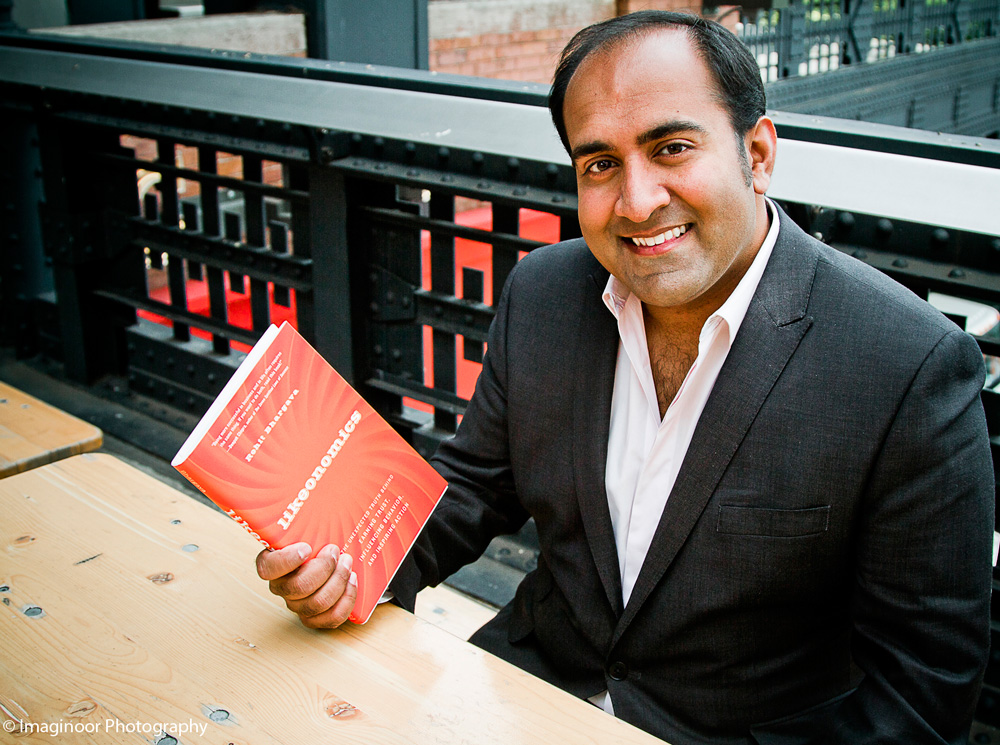
Rohit Bhargava and Likeonomics (source of image)
We are facing a crisis of believability in big businesses and brands.
Triggered by the collapse of the financial system in 2008, widespread deceit by big corporate brands and sheer volume of advertising “clutter”, consumers distrust big brands, companies and governments more than ever before.
How do you find out what truly makes your customers tick? Can you understand what your customer REALLY wants through surveys, focus groups, and structured interviews?
The answer, according to Linda Goodman and Michelle Helin, is “No”. Debunking traditional research predicated on the above yardsticks, the authors of “Why Customers Really Buy – Uncovering the Emotional Triggers that Drive Sales” claim that true insight can only be achieved through conducting emotional-trigger research.
With a population of 1.3 billion sprawled over a gargantuan 9.6 million sq km, the People’s Republic of China is widely known as the factory of the world. The middle kingdom’s dominance of global economic and socio-political affairs is impressive, with many regarding them as the “factory of the world”. Its ability to mobilise epic resources to achieve ambitious goals are also much-lauded.
However, what is the average Chinese person really like? What elements constitute the building blocks of China’s society – the very essence of being Chinese?
Why do certain marketing messages attract our attention while others leave us cold?
Thanks to a fascinating podcast by Derek Halpern of the Social Triggers website, I managed to uncover the answer.